Posts

Showing posts with the label solution manager

Automatic Upgrade of SAP Host Agent

Image
Upgrading the SAP Host Agent by extracting the SAR file in each server and executing ./saphostexec -upgrade command is tedious in case of a large landscape. You can use the DIR_TRANS folder which is network shared across all the systems in the landscape and the auto upgrade feature of SAP Host Agent to your advantage. Add the following lines to the host_profile file: hostexec/autoupgrade_delay=300 DIR_NEW = /usr/sap/trans/HOSTAGENT_UPDATE_FOLDER In the above example case, the host agent checks the folder /usr/sap/trans/HOSTAGENT_UPDATE_FOLDER every 300 minutes (5 hours) to check if a newer version of host agent is available. You have to choose the upgrade delay and DIR_NEW values suitable to your environment. When you want to upgrade the host agent Download the latest host agent SAR file. Do not extract it yet. Go to the folder specified in DIR_NEW and create a file .upgrading. The .upgrading file ensures that the host agent does not copy the files while the e...
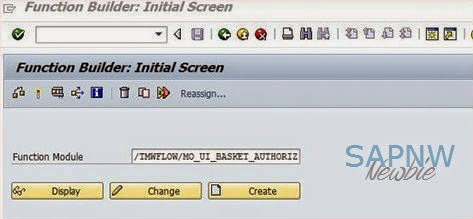
How to Approve Download Basket in SAP Solution Manager

Image
When you generate a stack XML, the required software is automatically approved for download. However, when you want to download a single patch (to fix a bug for example), you would add the software to download basket, but it would be sitting there waiting for approval. You can manually approve the software using the function module /TMWFLOW/MO_UI_BASKET_AUTHORIZ Log in to Solution Manager system. Call transaction SE37 and execute the function module  /TMWFLOW/MO_UI_BASKET_AUTHORIZ Set I_OSS_RFC = SAP-OSS and execute Select the software file and click on Confirm download Now the software will be ready to download in the Download Basket. You can also use the report /TMWFLOW/RMOBASKETAPPROVAL to approve the software.

SUM Javaonly update on Dual Stack

Image
SAP recommends using SUM tool for updates or upgrades , and at the same time they support SPAM and SAINT tools for updating ABAP stack. Using SPAM/SAINT is faster (and at the same time time tested method we all are comfortable with). As long as SAP continues supporting SPAM/SAINT, Basis admins are more likely to use it. For J2EE stack, SAP has discontinued support of updating using using JSPM. Therefore patching J2EE can only be done using SUM. In case of Dual Stack, because JSPM is not supported, J2EE can only be updated using SUM. You would still prefer to update the ABAP part using SPAM/SAINT. But you cannot patch ABAP and then start up SUM with default options to patch J2EE. It will error out on the ABAP side of SUM. To patch J2EE on Dual Stack system, you can start SUM using the following option: STARTUP javaonly With this option, SUM will not patch ABAP stack and will only patch the J2EE patch. The advantage? One can patch ABAP using SPAM/SAINT and then patch J2E...

Copying Solution Manager Diagnostic Agent from Other Host

A strategy that I have come across is that the  Diagnostic Agent (DAA) is installed on a host is copied over across other hosts through disk copied (ex: rsync) and then individually configured (corrected actually) using the following steps: As root user, stop saposcol and saphostexec /usr/sap/hostctrl/exe/saposcol -k /usr/sap/hostctrl/exe/saphostexec -stop Logon as daaadm (or the <sid>adm with which Diagnostic Agent is configured) Connect DAA to Solution Manager (the example shows connectivity to P4 port, you can also connect via Message Server using a slightly different command) /usr/sap/DAA/SMDA<NN>/script/smdsetup.sh managingconf hostname:"<FQDN of Managing Solution Manager Host" port:"<Solution Manager P4 Port>" Cleanup secure storage of the old DAA /usr/sap/DAA/SMDA<NN>/script/smdsetup.sh secstorej2ee user:"SMD_ADMIN" pwd:"<password>" Start DAA (saposcol and saphostexec will be automatically started...